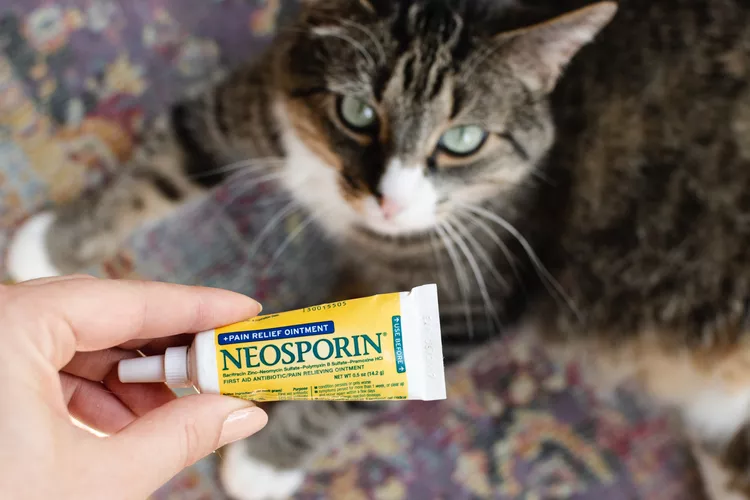
It may be tempting to slather Neosporin on your cat when you see it has a wound. But this first-aid kit staple, otherwise called triple antibiotic ointment, isn't recommended for use on cats. Neosporin can cause skin irritation and allergic reactions in cats.
If you want to create a first-aid kit for your feline companion, skip the Neosporin and keep an ointment from the vet on hand, along with some other essentials for cat first-aid.
What Is Neosporin?
Neosporin is the trade name for a triple antibiotic ointment created by the Johnson & Johnson company. It is made up of three different antibiotics: neomycin, polymixin B, and bacitracin. Neosporin (or generic, non-brand name triple antibiotic ointment) that is labeled as "pain relief" contains a fourth ingredient: a topical analgesic (pain reliever) called pramoxine hydrogen chloride.
In combination, the three topical antibiotics in Neosporin are effective at keeping wounds bacteria-free. They are very safe for topical use in people. In cats, topical application may cause mild skin irritation or an allergic reaction if the cat is sensitive to one or more ingredients, but other than that there are no major side effects to topical usage. If ingested in large enough quantities, however, it can cause vomiting, diarrhea, anaphylactic shock (a severe allergic reaction), or even death.
Can You Put Neosporin on a Cat?
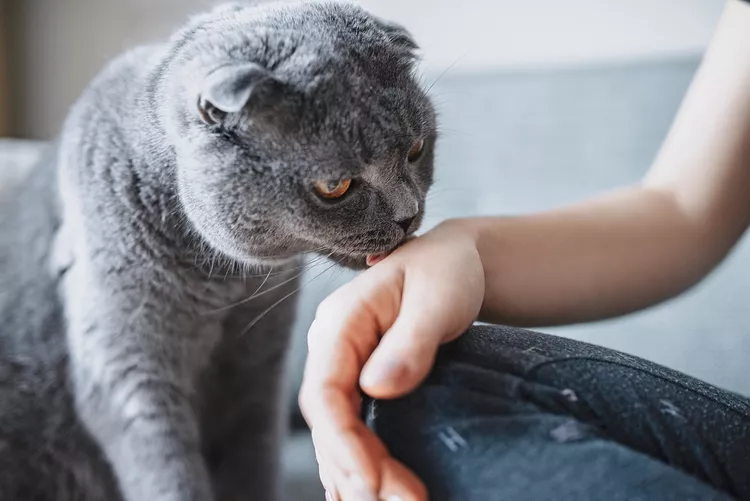
If Neosporin is meant to be used topically, how leery should one be if the component has such an adverse effect only when ingested? Remember that cats groom themselves daily, especially if it is feeling uncomfortable from their wound or the greasy ointment. Additionally, if you keep the "pain relief" variety on hand, the pramoxine hydrogen chloride additive can cause further skin irritation in cats.
For these reasons, even though Neosporin is technically safe for topical use in cats, it is not actually recommended for use in cats. The Animal Poison Control Center lists it as a medication that is toxic to pets.
Are There Alternatives to Neosporin?
Unfortunately, there is no over-the-counter alternative to Neosporin in cats. However, there are veterinary-specific ointments that can be prescribed in place of Neosporin. If your cat has a minor wound, schedule an appointment for your cat to be looked over by your vet. They can prescribe the right treatment for your cat's wound. If your vet discovers that your cat's minor wound isn't so minor after all, you're already in the right place to have it addressed.
Can I Do Anything at Home?
If your cat does wind up with a small injury, there are things you can do at home, after consulting with your vet. If there is active bleeding, apply gentle pressure to the wound with sterile gauze if your cat will tolerate it. Once you have the bleeding wound under control, check your cat over for any other wounds. If your cat is in too much pain to permit this kind of treatment, get it to a veterinarian right away for further care and pain management.
If you find a wound on your cat but it is no longer actively bleeding and it appears to be minor—small and not deep—you can gently clean the wound with a dilute antiseptic solution such as povidone-iodine. You can clean around the wound with sterile gauze and saline solution.
If you find any wounds that appear deep or look like a puncture wound, simply clean around the wound with saline and bring your cat to your veterinarian or a local emergency clinic right away.
First Aid Materials for Cats
Every cat owner should be prepared for an emergency that would require at-home care. Keeping your cat's first aid kit stocked with Neosporin may not be recommended, but there are certainly plenty of supplies that you can and should stock it with. First and foremost, your cat's first aid kit should have the phone numbers of your veterinarian, local emergency vet hospitals, and ASPCA Pet Poison Control (1-888-426-4435).
You should also have a copy of your cat's vaccine history, pertinent medical records, a photo, and a microchip number if your cat is microchipped. Your cat's first aid kit should have sterile gauze squares and non-stick or telfa pads. Blunt-ended bandaging scissors can be helpful to cut these materials. Povidone-iodine and saline solution should also be included in your kit to clean minor wounds. A properly fitting e-collar, or pet cone, is also important to prevent your cat from licking or chewing at its wound, which can make the injury worse and/or introduce infection.
If your cat allows you to take a rectal temperature, a rectal "fever" thermometer and water-based lubricating gel should be included. Make sure the thermometer is a "fever" thermometer as cats have a normal temperature that can be as high as 102.5 degrees Fahrenheit, so regular thermometers may not be able to read your cat's temperature, especially if they have a fever.
These are just the bare essentials to start your cat's first aid kit. Check out another great article on The Spruce Pets that details all the things that you need for a fully stocked, ready-for-anything first aid kit here.
Every cat owner wants to be able to help their pet when they need it. Keeping a well-stocked first aid kit is essential. Just make sure you keep the Neosporin out of the cat's first aid kit and in your own personal kit.
-
Can you use Neosporin on cats?
You should not, no. It can cause anaphylactic shock.
-
How do you remove Neosporin on cats?
With pet shampoo, and if you don't have that, try baby shampoo.
-
Does Neosporin work on cats?
No, because Neosporin is poisonous for cats and its use is life threatening.